Citizen-centric and efficient digital administration
Citizens expect fast, digital services. Employees need modern working conditions. At the same time, authorities and public administrations must protect sensitive data, meet regulatory requirements, and remain operational even in critical situations. This requires a powerful, secure, and sovereign network infrastructure as the foundation.
Between citizen expectations, skills shortages, and security requirements
Public administration today faces a dual challenge: it must provide services digitally, accessibly, and efficiently — while also ensuring data protection, availability, and trustworthiness. Digitalization must therefore not end with portals and forms. What matters is the infrastructure behind them: the network that securely connects applications, locations, data, and employees.
Whether citizen portal, data exchange, hybrid work, or cross-location collaboration: digital administration only works reliably when the technical foundation grows along with it.

Digital administration requires more than a 24/7 online portal where all public services can be accessed and that is practical and user-friendly on mobile devices. It also requires a secure, verified electronic identification system, or eID, for citizens, as well as official, tamper-proof electronic applications, certificates, and more — eDocuments — so that both sides are protected and can work in a legally valid way.
Online bureaucratic processes become more efficient when standardized information is stored centrally for all authorities and can be shared by them. Partially automated digital communication channels and application forms prefilled with basic data, which automatically inform users about the process flow and standard processing times, also make administrative matters more transparent while saving time and paper.
But to move public services into the digital world, the connecting element is needed first: the network that holds everything together and secures it. Networked authorities, maximum security, high-quality Wi-Fi, and simple, convenient network management that supports operations so effectively that teams can fully focus on their day-to-day work — with R&S Networks and Cybersecurity Systems, the foundation for digital administration is in place.
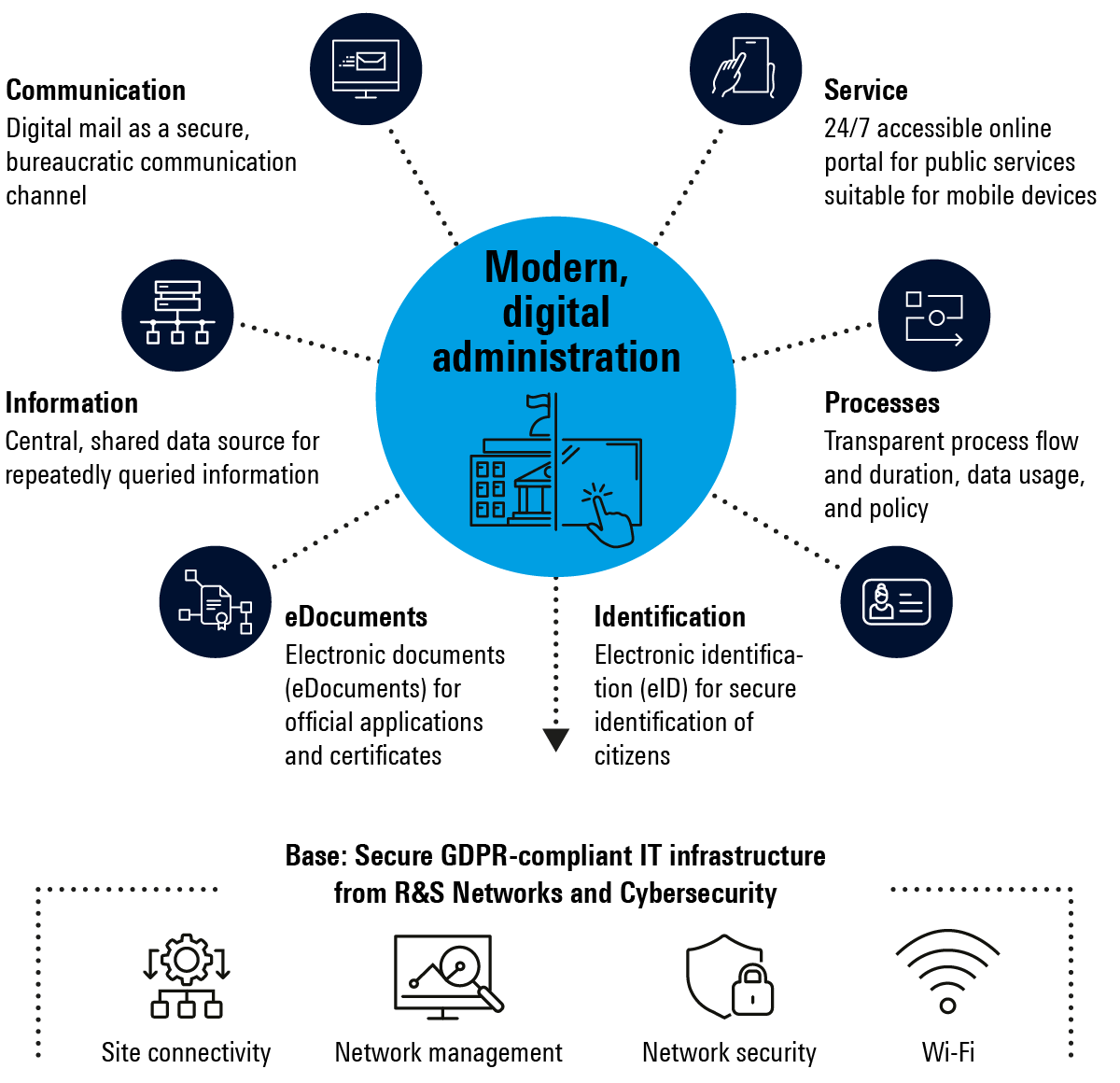



Digitalization starts with the IT network
A functioning digital administration does not begin at the surface, but in the infrastructure. The network is the technical heart of digital transformation in the public sector. It connects locations, enables secure access to applications, protects data, supports hybrid working models, and creates the basis for stable digital services.
Anyone who wants to modernize administrative processes therefore needs an infrastructure that is powerful, scalable, and easy to manage.

What matters in everyday administrative practice
For digitalization to work in everyday operations, technical and organizational requirements must go hand in hand. These include:
- secure Internet and site connectivity
- reliable access to portals and applications
- secure identification and digital application processes
- smooth data exchange between systems and institutions
- high-quality Wi-Fi coverage in administrative buildings
- central control and relief for IT managers
This creates administrative environments that do not merely appear digitalized, but also function in practice in a stable, efficient, and citizen-centric way.

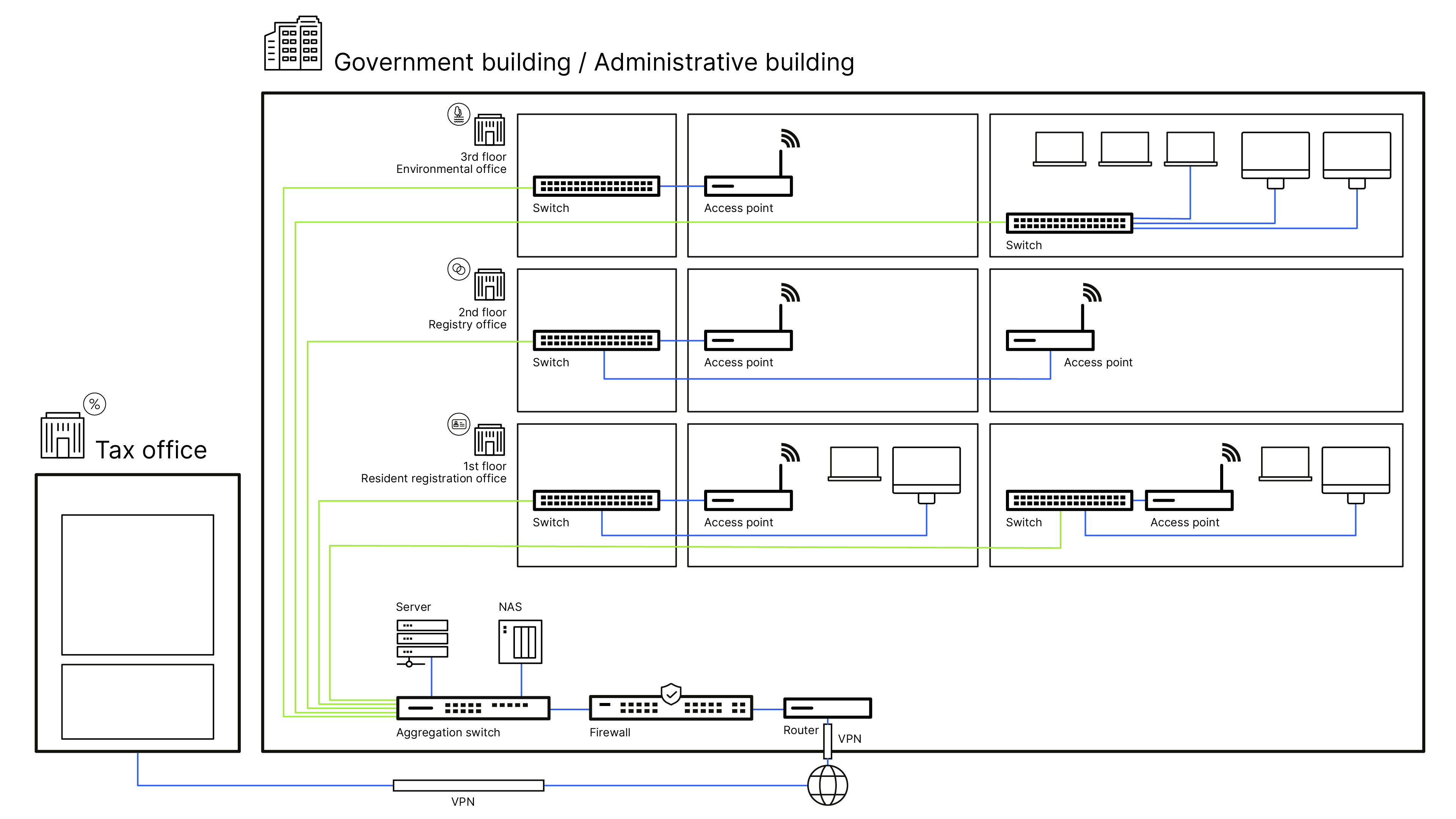
Scenario 1: Administrative buildings and citizen service offices
Where many employees, visitors, and departments come together, secure networks, reliable Wi-Fi, and a stable infrastructure are essential for ongoing operations.
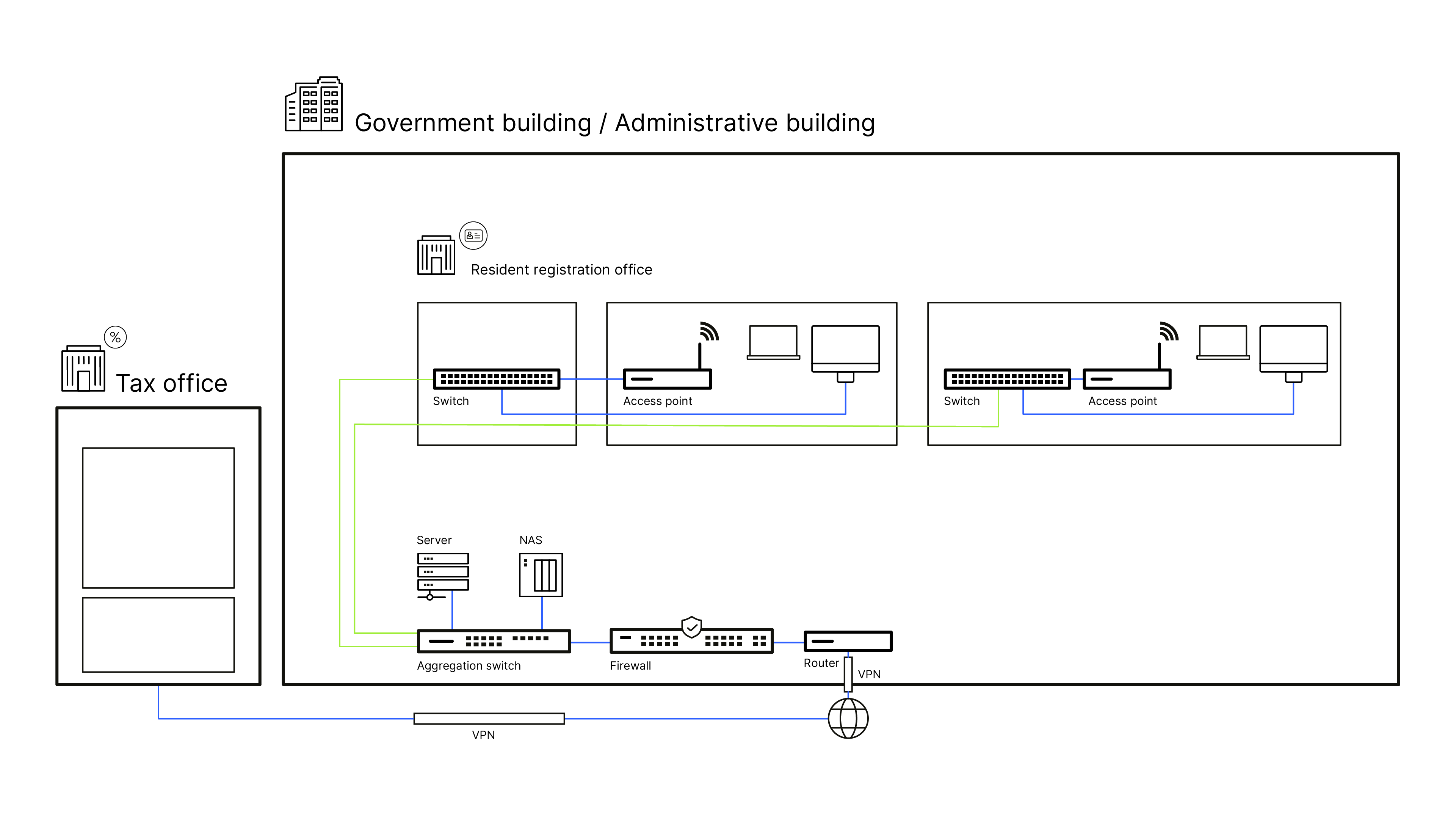
Scenario 2: Distributed locations and hybrid work
Offices, branch locations, and mobile teams must be securely connected with each other. Modern public administration requires protected remote access and uniformly manageable networks.
Digital sovereignty for public administration & authorities
In the public sector, it is not enough for digital infrastructure to simply work. It must also be sovereign. This means maintaining control over data, avoiding risky dependencies, and retaining the ability to act independently at all times.
For public administrations and authorities, digital sovereignty means retaining control over their data and IT infrastructure. They create resilient foundations for trustworthy digital services while strengthening their long-term ability to act.

Why R&S Networks and Cybersecurity
R&S Networks and Cybersecurity supports public administrations and authorities with network solutions that combine security, performance, and digital sovereignty.

Your benefits with R&S Networks and Cybersecurity
- Solutions for site connectivity, Wi-Fi, and security from a single source
- Development in Germany and Europe
- Hosting of central cloud management components in Germany
- GDPR-aligned approach and European security standards
- Central management for distributed infrastructures
- Predictable operation through transparent lifecycle management
- German-language support and experienced partner structures

Public administrations are responsible for highly sensitive personal information. This makes an infrastructure that considers data protection, security, and digital sovereignty from the outset all the more important. It creates a resilient foundation for trustworthy digital services — today and in the future.
Rohde & Schwarz Networks and Cybersecurity is a trusted German manufacturer subject to European law, with a strong commitment to data protection and digital sovereignty. That is why these aspects are built directly into a R&S Networks and Cybersecurity network, helping to provide users with the best possible technical protection and relief.
Why is secure network infrastructure crucial for digital administration?
A powerful and secure network infrastructure is the basis for digital administration. It reliably connects authority locations, specialist procedures, citizen portals, data, and employees. Only when networks are stable, scalable, and securely operated can public administrations offer digital services that are citizen-centric, efficient, and trustworthy.
What requirements must authority networks meet today?
Authority networks must protect sensitive personal data, ensure high availability, and enable modern forms of work such as home office, mobile work, and cross-location collaboration. This includes secure site connectivity, reliable Wi-Fi, protected remote access, central control, and GDPR-compliant operation.
What does digital sovereignty mean for public administrations and authorities?
Digital sovereignty means that public administrations retain control over their data, networks, and IT infrastructures. For authorities, this is important in order to remain independent, capable of acting, and trustworthy. A sovereign infrastructure supports data protection, transparent manageability, and the long-term security of digital administrative services.